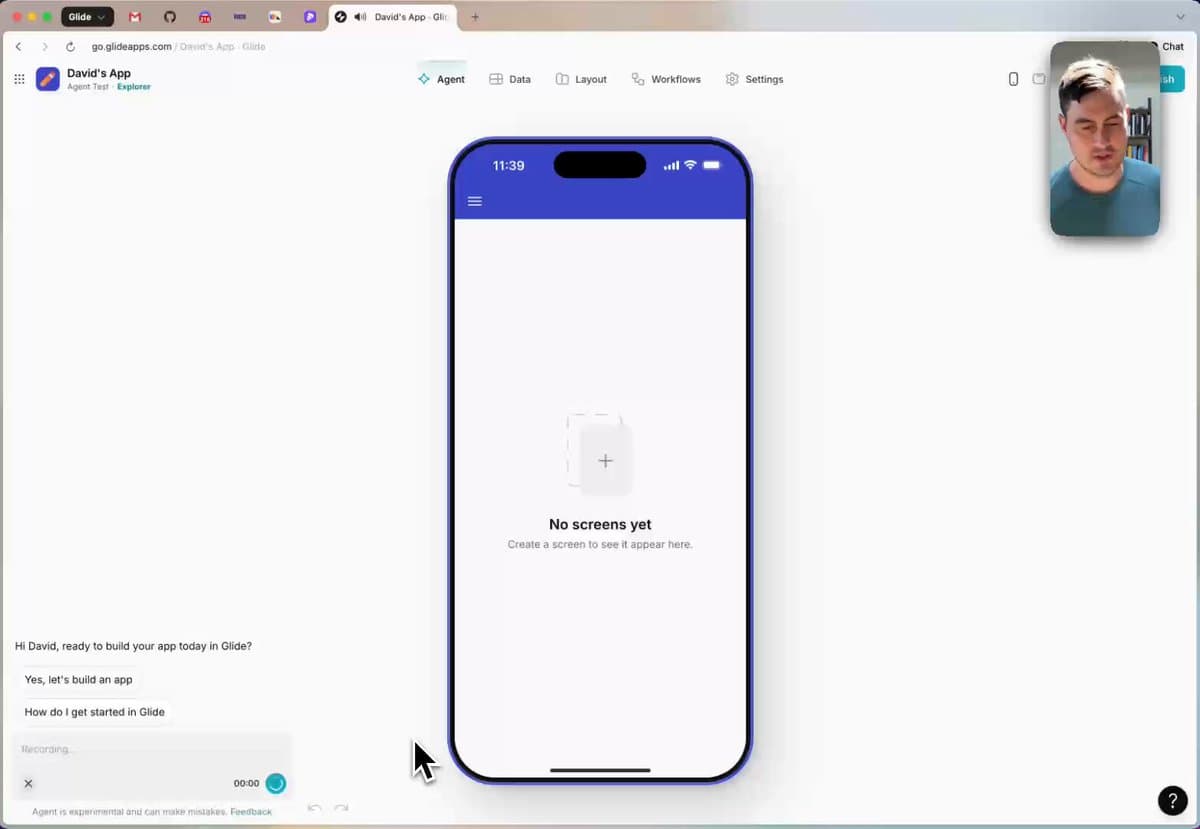
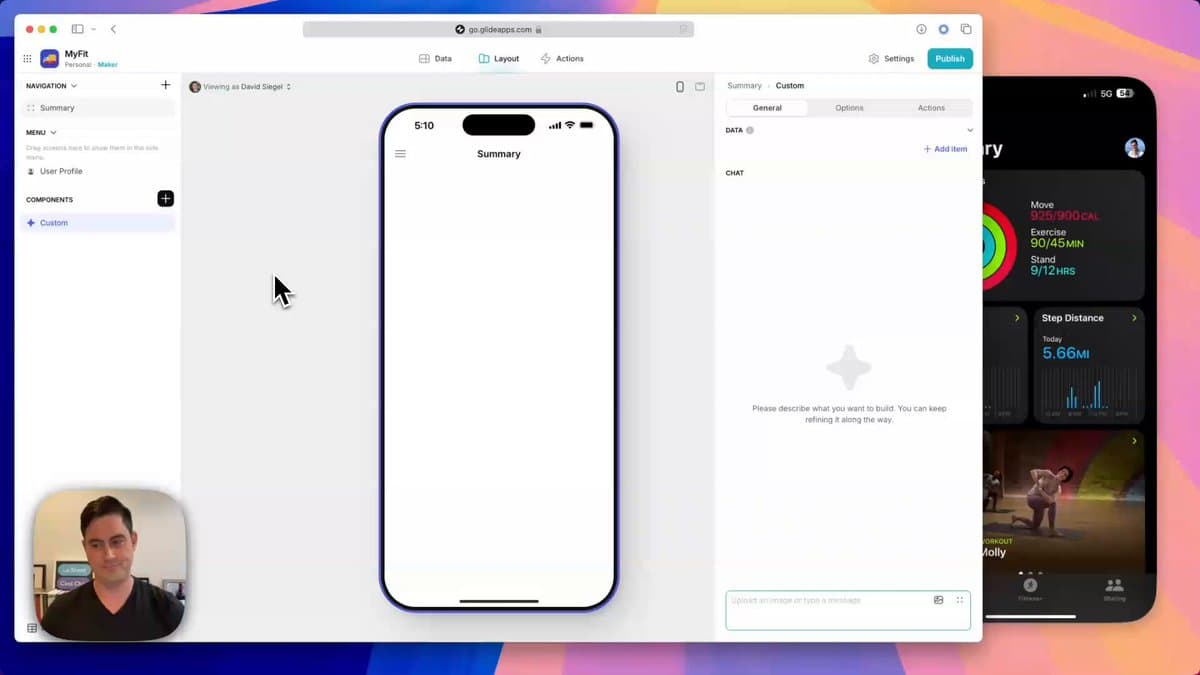
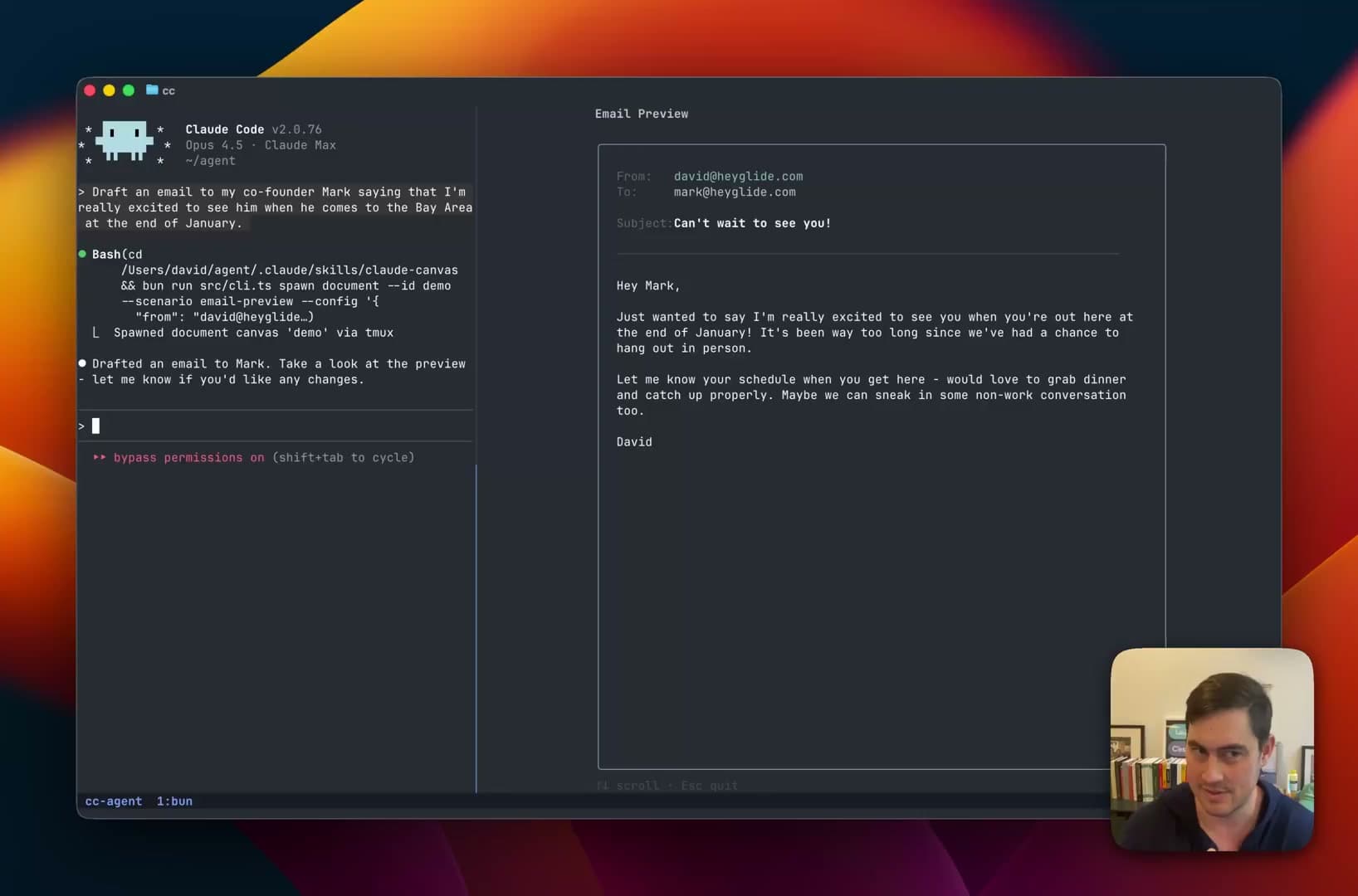
Three weeks before ChatGPT, we gave GPT-3 a description of Glide's interface and asked it to change a Zapier API key. It worked out the clicks on its own—settings, integrations, the right field—and a little cursor carried them out on screen.
We'd noticed users weren't discovering basic features. So we built a "magic cursor" that would appear in the builder and demonstrate workflows: adding components, customizing appearance, working with data. Each scenario was just a simple script—actions, CSS selectors, and explanations.
Then we had an idea: what if AI could write these scripts?
We fed GPT-3 some context about Glide's interface structure and asked it to accomplish tasks it had never seen. When we said "add a map to this screen," it figured out the click sequence. Even for features we hadn't described, it would guess selectors and often succeed.
We were treating Glide as a black box that AI could learn to navigate—no special APIs required. This was November 2022. Today, AI agents that navigate interfaces are everywhere. Back then, it felt like magic.