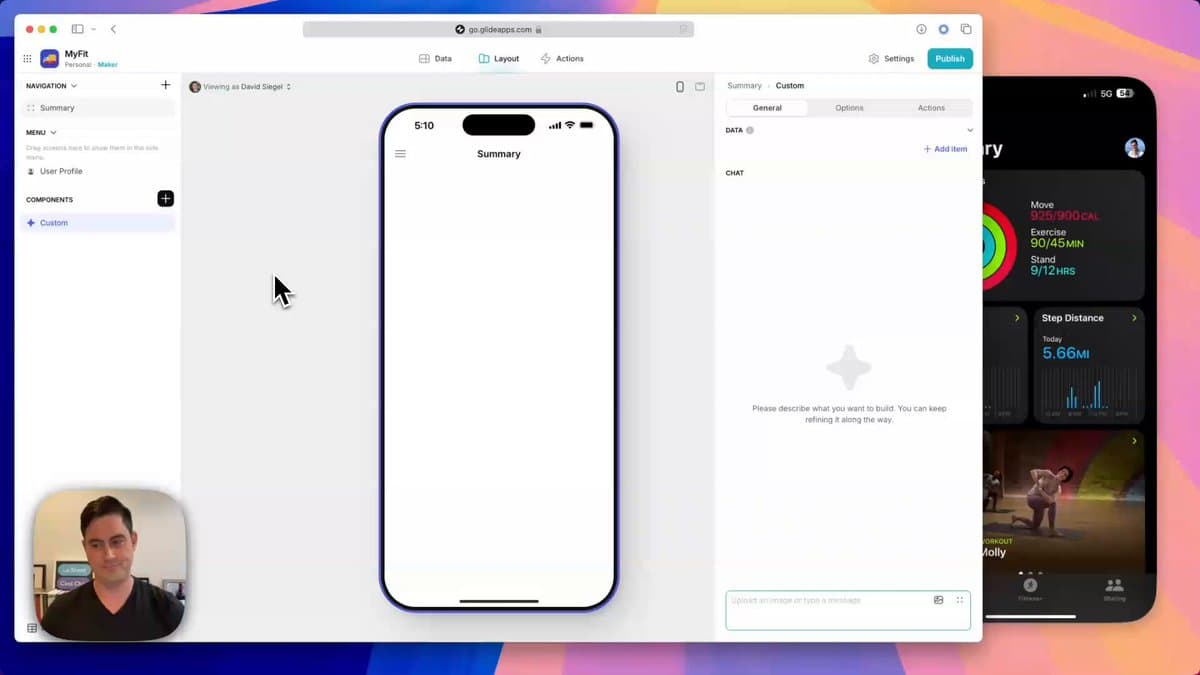
The gap in most app builders is between the screen and the data behind it—you edit one, then go fix the other. In this demo I ask Glide's agent for checkboxes to track an inventory workflow, and it adds three columns to the table on its way to putting them on screen.
At Glide, we derive interfaces from data. This becomes especially powerful when edits can simultaneously change both the screen and the underlying data structure.
When you start a new app, the agent handles setup automatically—branding, sample data, and screens for each table. In this demo, we're building an inventory management system.
The interesting part is when changes affect both UI and data model. Each inventory item needs to go through a three-step process: being received, cataloged, and checked for quality control. When you ask for checkboxes to track this workflow, the agent recognizes this requires schema changes and automatically adds three new columns to the inventory table—while placing the checkboxes on screen.
You can refine the interface further: adding subtitles with instructions above each toggle, rearranging layout. And the changes aren't just cosmetic—when you check off items, those changes persist to the database and appear consistently across views.
At the time of this demo, this kind of simultaneous schema and UI evolution was pretty novel in the vibe coding space. The space is moving quickly, but the core idea remains powerful: iterate on your ideas without getting stuck in the gap between what you want to express and what your data model can support.